
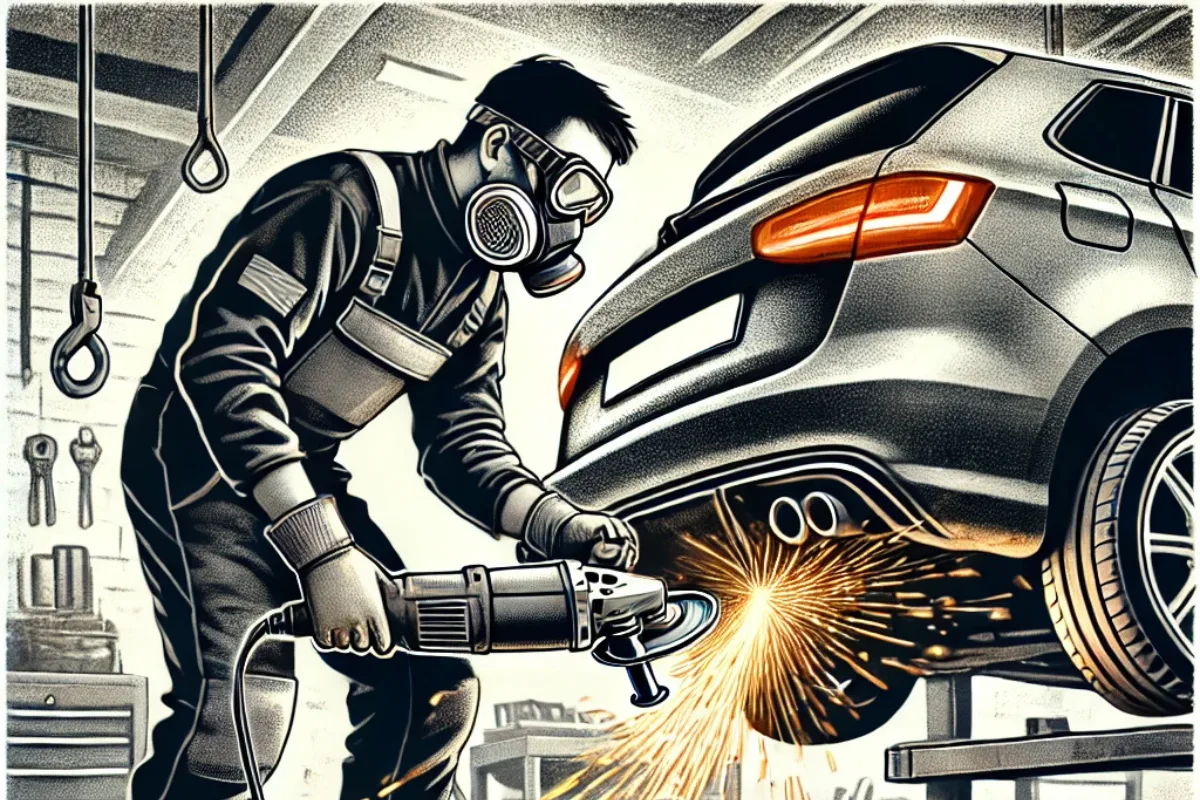
Nowadays it is not hard to find online offers for services that promise to “solve the problem” related to the DPF filters in cars. Many vehicle owners decide to take this step without seeing anything wrong with it. What is more, they are often convinced that the filter removal procedure is completely legal. Unfortunately, awareness of this issue remains limited, and many drivers are not aware of the legal, environmental and financial consequences of removing the DPF filter.
The function of the DPF filter
The DPF filter plays a key role in reducing emissions of soot and other harmful substances into the atmosphere. As the number of cars on the roads has grown, so has air pollution in cities. The introduction of the particulate filter was intended to reduce the amount of toxic particles reaching the air we breathe. The exhaust gases from diesel engines are far more harmful than those from petrol engines.
Why do drivers remove DPF filters?
The popularity of diesel engines is due mainly to the lower cost of fuel compared with petrol. Over time, these engines began to be fitted in passenger cars as well, which caused problems: short journeys, traffic jams and low speeds in cities prevent the particles in the filter from burning off properly, which leads to it becoming clogged. In such situations, many drivers decide to remove the DPF, encouraged by the simple approach of the workshops that specialise in this type of service.
Is it legal to remove the DPF?
Online advertisements often mislead customers. Not only is it prohibited to remove the DPF filter, but it is also illegal to drive a vehicle without it on public roads. The owners of such vehicles run the risk of having their vehicle registration withdrawn and of receiving a heavy fine. In addition, penalties can also apply to the owners of the workshops that offer or advertise these services.
Illegality and consequences
Many people wrongly assume that, if these services are widely advertised, they must be legal. However, removing DPF filters from vehicles that travel on public roads is illegal and strictly prohibited.
Alternative: DPF regeneration
Instead of removing the filter, regeneration is recommended. The hydrodynamic method, for example with the help of the XTON DPF Master Flash device, makes it possible to restore the filter to its original condition at a relatively low cost. This type of service is becoming increasingly popular, which makes it an attractive commercial proposition for workshops.
Consequences in different countries
Driving a car without a DPF filter has serious consequences. In Germany the fines range from 1000 to 5000 euros, in Austria they are 3500 euros, in the Czech Republic up to 50 000 Czech koruna and in Great Britain 1000 pounds.
Conclusion
Removing the DPF filter carries a high risk, including financial fines, withdrawal of the vehicle registration and even the vehicle being taken out of circulation. These penalties will become tougher over time, and emissions checks will grow ever more rigorous. Therefore, instead of taking the risk, it is worth opting for filter regeneration. If you run a workshop, consider including DPF regeneration in your offer: it is an investment that can pay for itself quickly.