
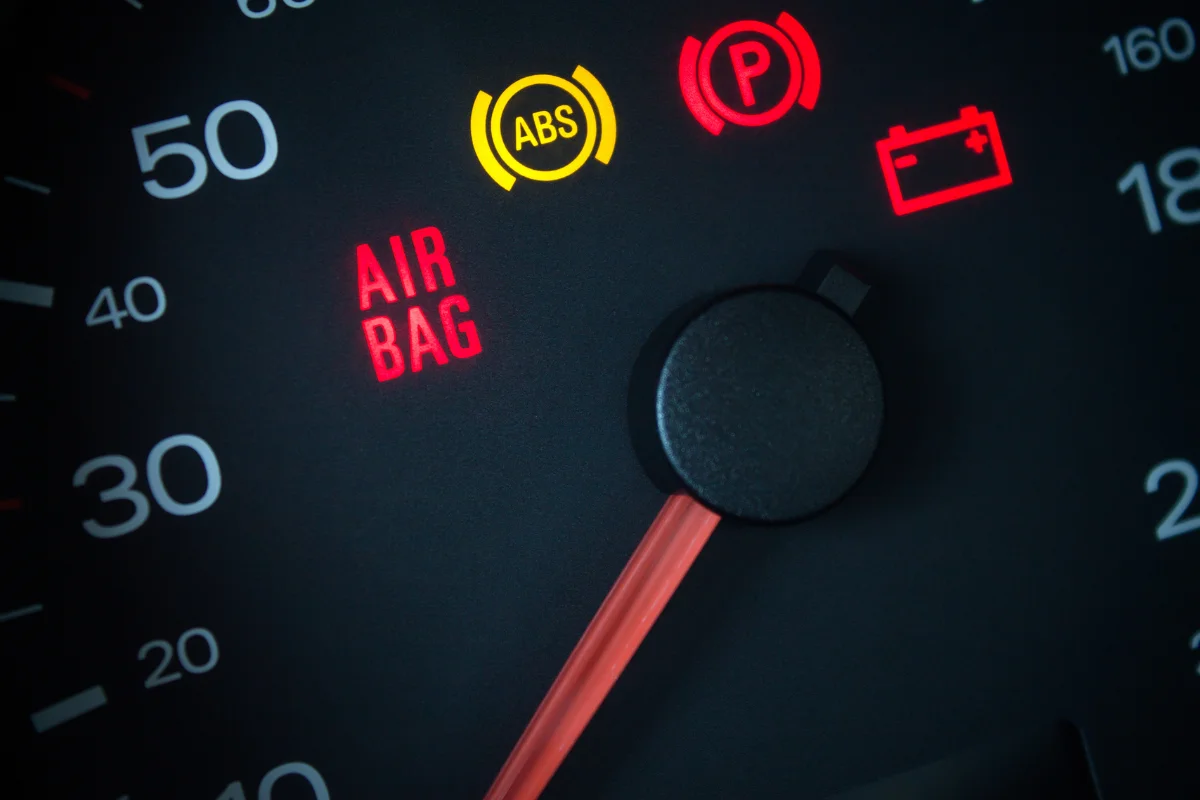
Modern cars are fitted with numerous warning lights that provide drivers with key information. There used to be only a handful, but nowadays their number is considerably greater, which can cause confusion. Below we explain the meaning of each symbol and when you should pay them particular attention.
Types of warning lights on the instrument panel
On the instrument panel you can find three basic colours of warning light: red, orange (or yellow) and green (or blue). Their function can be compared to that of a traffic light:
- Red lights warn of a serious problem that requires you to stop the vehicle immediately and fix the fault before continuing to drive.
- Orange or yellow lights indicate less urgent problems, such as faults or the need to check certain systems, although they can also serve as purely informational indicators.
- Green and blue lights merely inform you about the vehicle’s active functions, such as the lights being on, and require no reaction from the driver.
How do you recognise the meaning of a warning light?
The colour of the light indicates the seriousness of the problem, while the symbol offers detailed information about the specific system or part of the car it refers to. Below is the meaning of the most common lights.
Red warning lights
Red lights indicate faults or situations that require immediate attention. Some of them include:
- Braking system: a circular icon with an exclamation mark in brackets.
- Power steering: the symbol of a steering wheel with an exclamation mark.
- Airbags: an icon of a person with an airbag in front of them.
- Battery charging problem: the battery symbol.
- Low oil pressure: an icon of the oil can.
- Minimum fluid level: a circle with fluid inside the container.
- High coolant temperature: a thermometer over a wave.
Flashing red lights may indicate that the doors are open, that the seat belts are not fastened or that the handbrake is applied. Red lights require an immediate reaction and stopping the vehicle.
Orange or yellow warning lights
Warning lights indicate significant problems, but it is still possible to drive. However, you need to visit a workshop as soon as possible. Most commonly they indicate:
- Engine warning: the engine icon lights up together with check engine.
- ESP system: a triangle with a car skidding inside a circular arrow.
- ABS system: a circle inside bars with the letters ABS.
- Transmission problem: a gear icon with an exclamation mark.
- Low tyre pressure: a tyre icon with an exclamation mark.
- Low fuel level: a fuel pump icon.
Green warning lights
These lights do not have a warning function; they merely inform you about the vehicle’s active functions. Generally, they indicate:
- Indicators: two arrows, one pointing left and the other pointing right.
- Dipped headlights on: a green headlight symbol.
- Cruise control: a speedometer icon with an arrow.
Special note about the DPF filter
The pictogram showing a rectangle with dots or a rectangle with arrows refers to the DPF filter. When the DPF warning light comes on, it may indicate the start of the filter’s automatic cleaning. If the light does not go out, you need to visit a service centre to fix the fault. Ignoring this light can cause:
- engine problems,
- oil dilution,
- activation of limp-home mode,
- damage to the turbocharger or the injector.
The solution is DPF regeneration using a specialised device, such as the XTON DPF Master Flash Professional PLUS, which restores the filter to up to 99 % of factory specifications.
Conclusion
Red lights require an immediate reaction and stopping the vehicle. Orange lights indicate the need to have the vehicle inspected at a workshop. Green and blue lights serve exclusively as informational indicators about the active functions.
If an unfamiliar light appears, consult the vehicle’s manual or visit a workshop to avoid potential problems.