
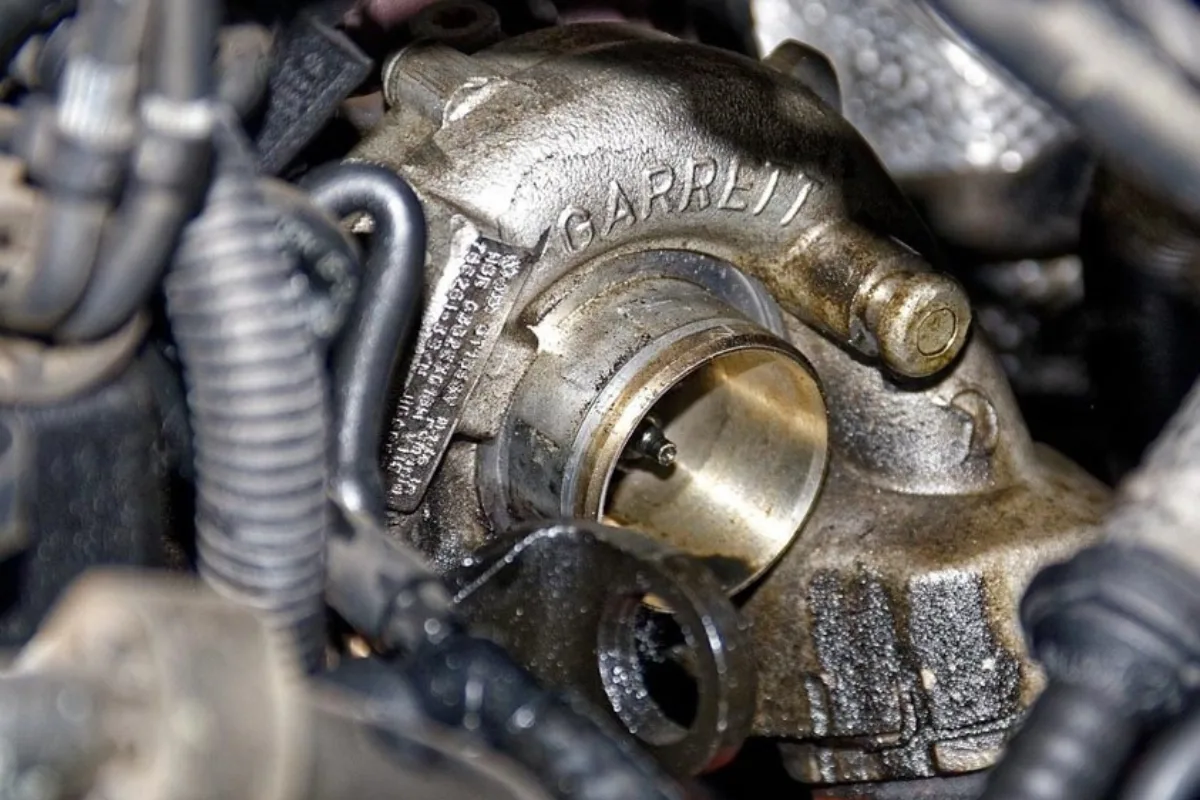
Unfortunately, it is true. A clogged and faulty diesel particulate filter (DPF/FAP) or catalytic converter can turn into a real nightmare for your turbocharger. The situation can also occur the other way round: a faulty turbocharger can cause the DPF to clog.
The malfunction of one component often leads to problems in other parts of the exhaust system. A clogged particulate filter causes a significant increase in the mechanical load on the turbocharger. Problems with the DPF are usually accompanied by engine oil mixing with fuel, whereas the turbocharger requires proper lubrication of its components. An engine with a damaged turbocharger emits more soot, which in turn clogs the channels of the filter.
Today, when the automotive industry is dominated by engine downsizing and an eco-friendly approach, it is increasingly difficult to find engines without a turbocharger or complex exhaust-gas filtration systems. Diesel engines without DPF/FAP/SCR systems are gradually becoming a thing of the past. As is often the case, additional components can generate additional problems and unexpected costs: the durability of the turbocharger and the particulate filter is interrelated, and the malfunction of one component sooner or later causes the failure of the other.
A properly functioning DPF/FAP captures up to 90 % of the soot particles, which causes it to fill up quickly. To avoid frequent replacements, the system must allow the filter to regenerate. To burn off the soot, it is necessary to raise the temperature inside the monolith, for example through additional fuel injection or the application of a special product that lowers the temperature required to remove the residue. Unfortunately, even when the self-cleaning process is carried out correctly, it is not 100 % effective: ash that does not burn remains inside the filter and, as it accumulates, the filter clogs over time. In addition, active regeneration can be performed incorrectly, be interrupted or, due to various factors, fail to start at all. In such cases, the amount of deposits increases, reducing the flow rate of the filter.
During active regeneration, a dose of fuel is injected inside the filter to allow it to heat up. If the process is interrupted, the unburnt fuel passes into the engine oil, increasing its quantity and reducing its viscosity. For this reason, in some cases (especially in urban vehicles) an increase in the oil level can be observed; in that case, it must be changed immediately and a diagnosis carried out to determine the cause of the problem. The increase in back pressure is a decisive factor for the turbocharger: this happens when the DPF is completely clogged and the exhaust gases cannot pass through it into the exhaust system.
Consequences
- Damage to the turbocharger shaft caused by the exhaust gases.
- Extraction of oil from the rotor shaft bearing and carbonisation of its residue.
- Deterioration of lubrication.
- Mechanical damage inside the turbocharger (vanes, bearings, shaft).
How to prevent the damage?
First of all, it is necessary to address the first symptoms of DPF/FAP clogging and to ensure that the particulate filter’s self-cleaning process works correctly and without interruptions. Warning lights and messages on the dashboard should not be ignored: it is necessary to react quickly so that one fault does not cause others.