
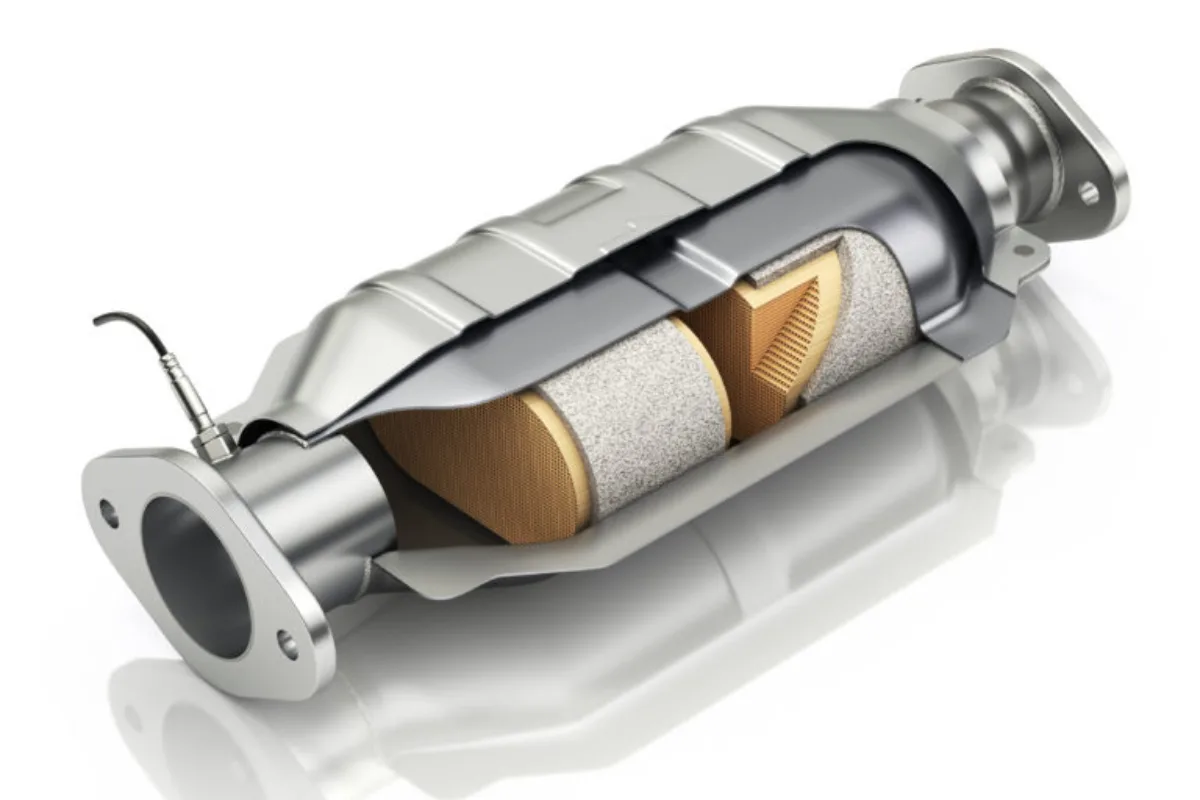
The diesel particulate filter (DPF) is considered one of the most problematic components of modern cars with diesel engines. In addition to being very complex, it is also expensive. How is the DPF filter built? How do you correctly use a car with a DPF to avoid breakdowns? And how do you prevent it from clogging?
The first particulate filters appeared in diesel cars as early as the 1980s, with the function of removing the typical black smoke from exhaust pipes. Back then they were used rarely. No modern diesel engine has managed, nor can it, to completely mix and burn the fuel and air during operation. The leftover fractions cause the formation of soot, that is, solid particles, made up of carbon, hydrocarbons, sulfates, sulfur oxides, metals and water.
In 2006 the European Union introduced the Euro 4 standard on exhaust gas emissions, which drastically reduced the permitted amount of particulates: from 0.05 g/km (Euro 3) to 0.009 g/km. It was then that car manufacturers returned to an already known solution: particulate filters, which became a mandatory component in all diesel vehicles.
Technical solutions developed in two directions: most manufacturers used standard DPF filters, while French manufacturers (Renault, Peugeot, Citroën) introduced the so-called FAP filters, known as «wet» filters.
How is the DPF filter built?
The DPF filter is part of the exhaust system and is installed behind the catalytic converter. Its appearance resembles that of a catalytic converter: it is placed in a round or flattened metal housing. Its operation is controlled by the electronic control unit (ECU), which collects data from the pressure and temperature sensors located before and after the filter.
Inside the metal housing there is a ceramic cartridge with a structure of parallel channels, alternately blocked: the inlet channels are closed on the exhaust pipe side, and the outlet channels on the engine side. The exhaust gases leave the filter through the porous walls of the channels (known as wall flow), which retain the soot particles.
Is the DPF filter really maintenance-free?
In theory, the DPF filter should not require maintenance. The exhaust gases pass through the channels, while the solid particles are retained on the walls. These particles should burn off during normal driving, when the exhaust gas temperature reaches between 400 and 600 °C. If clogging were to occur, the problem should be resolved through active regeneration, which consists of an additional injection of fuel to burn the soot.
However, in practice this does not always work perfectly. For the filter to work correctly, the engine must be in perfect condition. Problems such as oil leaks, worn seals or faulty injectors accelerate the clogging of the filter.
Some manufacturers tried to solve the problem by adding greater complexity to the filter, with additional functions such as injecting fuel directly into the filter for regeneration. Although this extended its service life, it did not completely prevent clogging, and the price of these filters turned out to be considerably higher.
Conclusion
Although the DPF filter is designed as a maintenance-free system, its correct operation depends on good engine maintenance, the use of suitable oils and appropriate driving. Otherwise, clogging can lead to costly repairs.